In Surat, in the first week of January this year, a man descended into a sewer without a mask and did not come back up. The methane displaced the oxygen in the way methane always does — silently, without negotiation, without the courtesy of a warning that lasts long enough. His colleague went down after him, and the gas took him too.
The newspaper item was four lines long and appeared on page seven, between a property dispute and a temple renovation update, and by the afternoon it had dissolved into the digital sediment of a nation that generates more news than grief.
I have not been able to locate the original newspaper report for this specific incident, and I want to be honest about that — the details are reconstructed from multiple reports of near-identical events in Gujarat's sanitation workforce, incidents that surface and vanish with a regularity that should itself be the headline, documented by organisations like the Safai Karmachari Andolan and reported in local papers that few outside the affected communities ever read.
Fast forward a year or so, at the India AI Impact Summit 2026 in Delhi, a humanoid robot performed movements on stage while cameras flashed and ministers smiled. Qualcomm unveiled its Dragonwing IQ-10 robotics processor, and the mood was aspirational and warm and eager to believe, the way a room full of people becomes when the future is projected on a screen large enough to obscure the present.
What came to light soon after was less warm: the robot at the centre of the Galgotias University spectacle, widely reported as a Chinese-made machine whose origins were obscured or inadequately disclosed, became the subject of swift embarrassment and merciless memes, and the news cycle moved on.
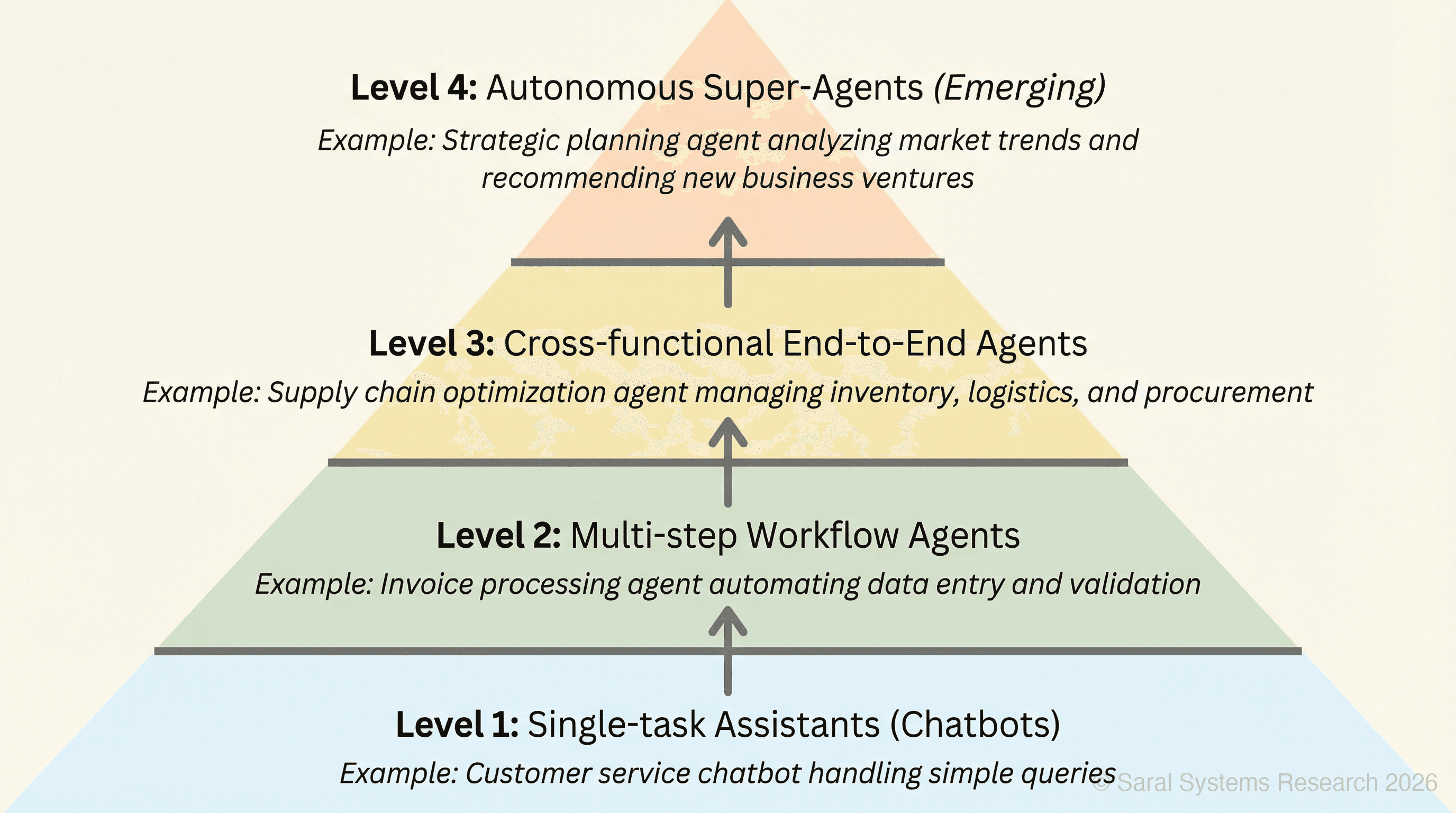
The embarrassment matters less than what it floats upon — something much deeper and much older, visible only if you are willing to look past the ripple to the current beneath. Since the Prohibition of Employment as Manual Scavengers Act was passed in 2013, the National Commission for Safai Karamcharis has documented over 900 deaths in sewers and septic tanks — a figure covering roughly three decades of record-keeping, though advocacy groups like the Safai Karmachari Andolan argue the true number is several multiples higher due to systematic underreporting and the misclassification of cause of death in communities whose losses rarely attract official scrutiny. These are deaths that are documented, which means the real number lies deeper still, in a stratum of record-keeping we have chosen not to excavate. India's robotics conversation orbits around humanoids and factory automation and the shimmering promise of artificial general intelligence and the venture-capital vocabulary that accompanies all of it, while the most immediate and morally urgent application of robotics — the liberation of human beings from work that asphyxiates them — remains peripheral and underfunded and spoken of mostly at conferences where the applause is polite and the follow-through is absent and the PowerPoint slides are archived in folders no one opens again.
India's robotics ambition might be better measured by the air quality at the bottom of a manhole than by the camera flashes at a summit — the vertical distance between those two spaces being also the moral distance the country has yet to travel.
What China Built While India Debated
There is a particular kind of clarity that emerges when a state decides that something is infrastructure rather than novelty, and China's humanoid robotics programme has that clarity: like a river has direction, gradient, and the channel.
UBTECH plans to increase its annual production capacity of industrial humanoid robots to 10,000 units in 2026. According to estimates cited in The Hindu's analysis of India's robotics position, AgiBot holds roughly 31% of global humanoid unit installations, with Unitree following at approximately 27% — though these figures should be treated with caution, given that the total global humanoid market is still in its earliest phase, with over 14,000 humanoid robots shipped globally in 2025 — a figure that represents a meaningful shift from prototypes to production-ready units, even as established analyst firms like IFR have yet to publish definitive share breakdowns at such low volumes. China's Ministry of Industry and Information Technology has laid plans to deploy thousands of humanoid robots across factories and farms as early as 2025, as permanent workers embedded in production lines. The global humanoid market is estimated at $4–5 billion in 2026, projected to reach $10–15 billion by 2030, nested within a broader robotics market heading toward $160–260 billion in the same timeframe.
The numbers are instructive, but the architecture beneath them is more so. Chinese component manufacturers — companies like Leadshine and T-Motor and a growing ecosystem of planetary-gear and quasi-direct-drive actuator suppliers — have driven the cost of small-to-mid-range joint actuators down to figures that would have been unthinkable five years ago. Approximate industry pricing — drawn from supplier catalogues and trade-show reporting rather than any single definitive source — suggests that lightweight quasi-direct-drive actuators suitable for upper-limb and auxiliary joints can now be sourced for under $100 per unit from Chinese suppliers, compared to $500–$2,000 or more for harmonic-drive units from Japanese manufacturers like Harmonic Drive Systems. These are not equivalent components — quasi-direct-drive actuators use low gear ratios, typically 4:1 to 10:1, trading torque density for high backdrivability and compliance, while harmonic drives use ratios of 50:1 to 160:1 for compact high-torque output — so the cost comparison reflects not a like-for-like substitution but a broader trend in which Chinese manufacturers are offering actuator architectures that are adequate for certain joints at a fraction of the price, even as high-torque load-bearing applications still demand the performance envelope that harmonic drives provide. The caveat matters further: a $70–$100 actuator for a wrist joint is a very different component from a high-torque actuator for a load-bearing hip, and a complete robot requires dozens of actuators plus sensors and compute and chassis and power systems and waterproofing and communications — a full bill of materials that can easily reach $50,000–$200,000 depending on capability. The cost of a single component does not make a robot affordable. But the trajectory of that cost, and the manufacturing ecosystem that produces it, tells you something about where the economics are heading and how fast.
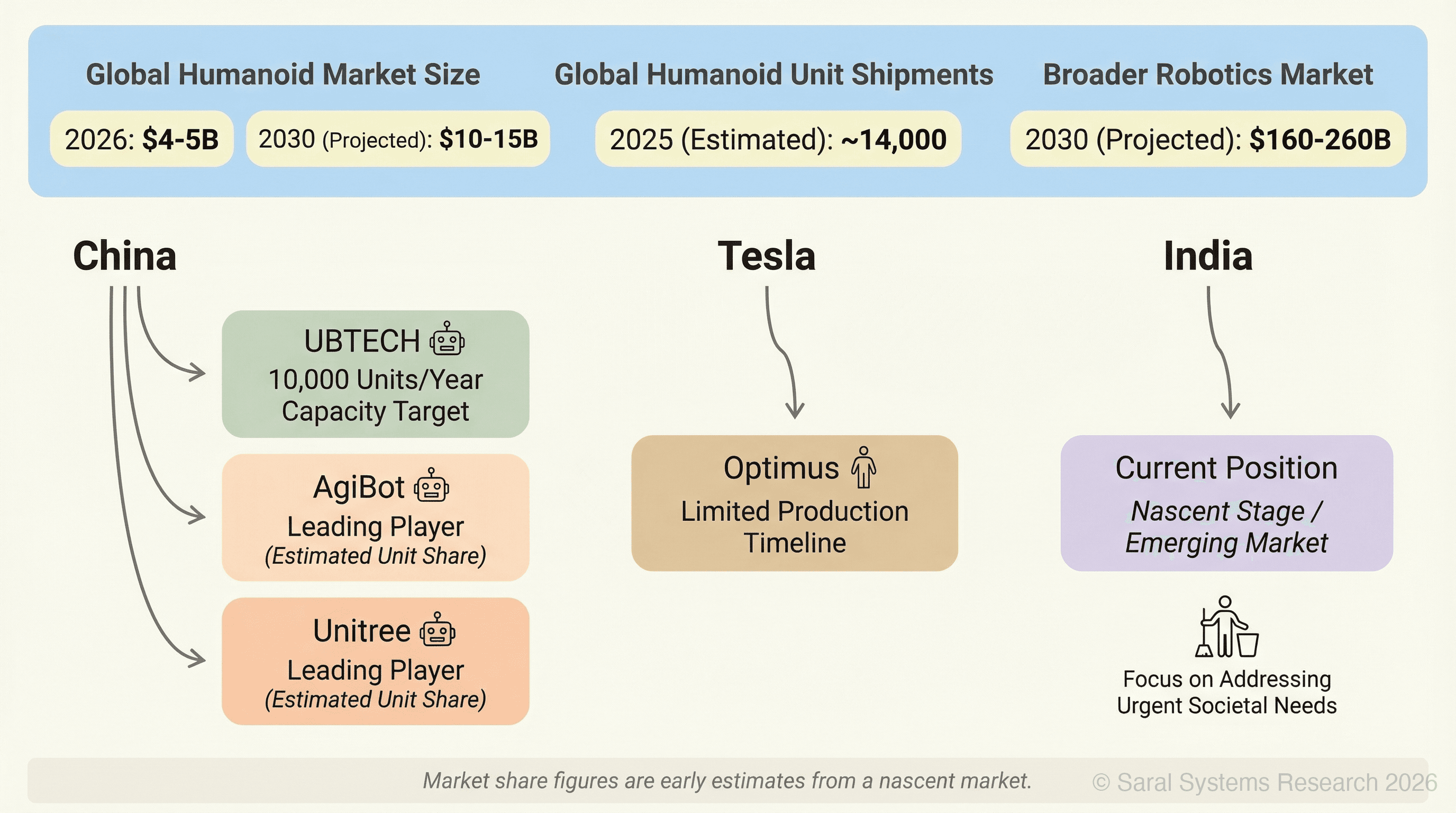
China's advantage, I want to be precise about this, is not merely engineering talent or manufacturing scale. It is the national decision — made at the level of industrial policy, funded at the level of state commitment — to treat robotics as the next layer of physical infrastructure. India has not yet made this decision. And in the absence of that decision, we showcase borrowed machines and applaud borrowed futures.
The Labour That Kills: India's Unfinished Work
The sewer work death that preceded the India AI Summit is a recurring, not isolated event. Three weeks, after the summit, another sewer worker succumbed in Indore.
There is a well in every Indian city, and by well I mean the network of sewers and drains and septic tanks that constitute the digestive system of urban life, and into this well, generation after generation, the same communities have been sent to descend. The well does not change, and neither does the caste of the person who enters it, and this twinned permanence is the thing that should keep us awake. The legislation exists the way a lid exists over a well that is still open — present and visible and entirely beside the point, because what is missing is the civilisational will to seal the shaft.
Manual scavenging and sewer cleaning in India carry a dimension that no purely economic analysis can capture: the work is stratified along caste lines with a rigidity that mocks every constitutional promise of equality. The Safai Karmachari Andolan has documented how the overwhelming majority of those who die in sewers belong to Dalit communities, which means that this is a social justice crisis encoded in occupation, inherited like a surname, and just as difficult to shed — labour and caste fused so completely that to speak of one without the other is to describe a river without mentioning water.
And sewers are only one chamber of this larger architecture of hazardous labour. India generates tens of millions of tonnes of solid waste annually — the Central Pollution Control Board's most recent estimates place the figure above 60 million tonnes — and across landfills from Ghazipur in Delhi to Deonar in Mumbai, ragpickers and sanitation workers sort this waste with bare hands, exposed to biological pathogens and chemical toxins whose effects accumulate in the lungs and the blood and the joints over years, shortening lives by decades in ways that never appear in any actuarial table. Railway track cleaning, industrial tank cleaning, the ship-breaking yards of Alang where men dismantle vessels with cutting torches and little else — the full spectrum of hazardous manual labour in India is vast and varied and unified by a single quality: these are jobs where the human cost — medical expenses and shortened lifespans and generational poverty and the quiet erosion of families who never accumulate enough to leave — is enormous and entirely externalised, borne by the workers and their families and never appearing on any municipal balance sheet.
The economic argument sometimes persuades where the moral argument cannot. These jobs are not "low-skill" — a term that reveals more about the person using it than the work being described. They are high-risk, and the lifetime cost of a sanitation worker's occupational illness, borne by a public health system already stretched to translucency, dwarfs the cost of the robot that could have done the work.
To be fair, there are Indian efforts.
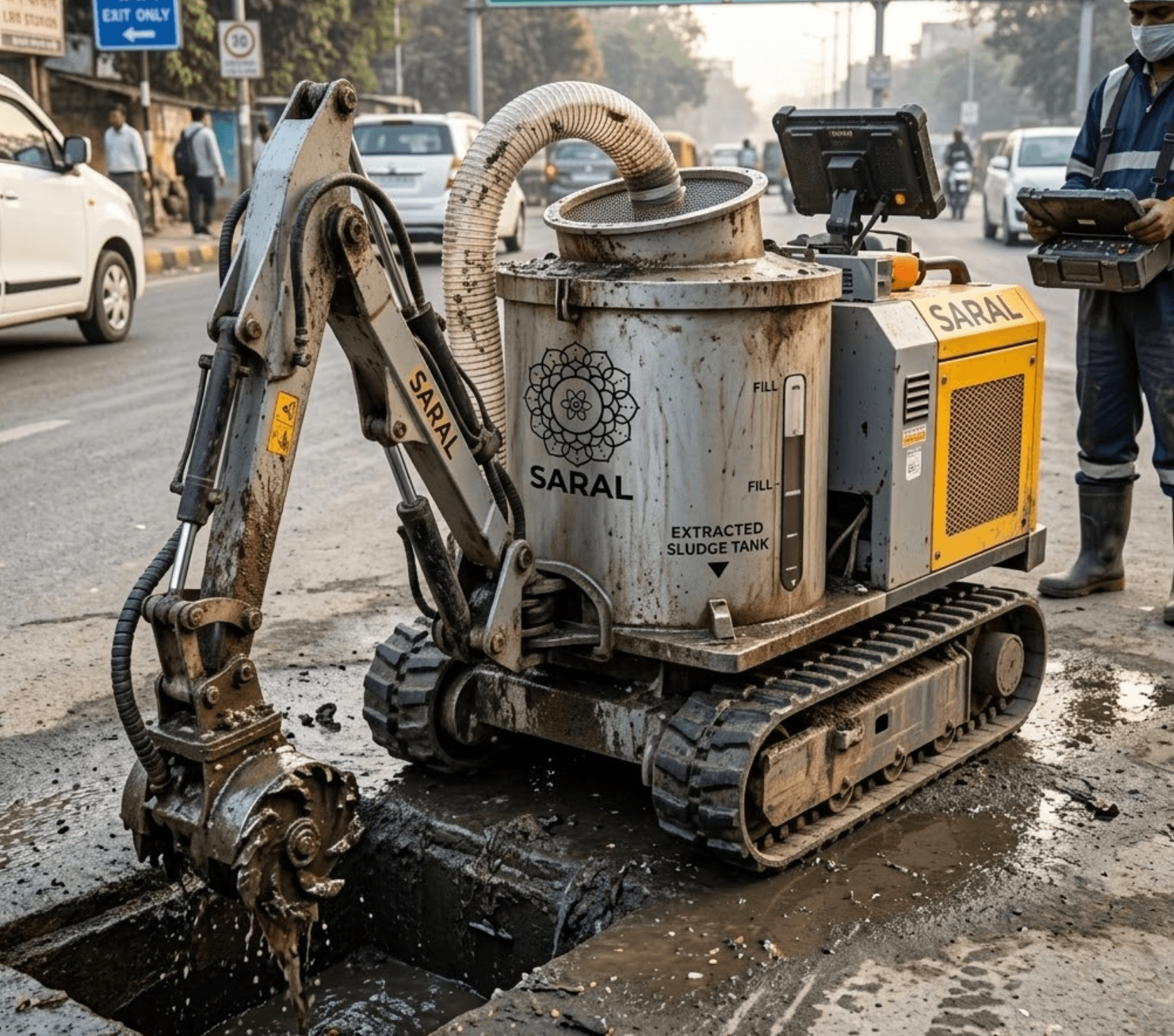
Genrobotics' Bandicoot, a sewer-cleaning robot deployed in Kerala and expanding to other states, represents genuine Indian engineering applied to a genuine Indian problem. At a reported cost of approximately ₹25–30 lakh per unit, it offers a concrete reference point for what hazardous-labour robotics actually costs. While Bandicoot provides the preliminary blueprint, we need to innovate further that this doesn't remain isolated and startup-scale and dependent on the enthusiasm of individual municipal officers and vulnerable to the transfer posting that moves that officer to a different district and a different set of priorities.
India - my country that celebrates jugaad — the improvisational fix, the workaround, the brilliant hack — must confront what jugaad means when applied to human beings.
Sending a man down a well because building a machine is harder is abandonment dressed as resourcefulness, and the costume has worn thin enough that the shape beneath it should embarrass anyone still willing to look.
The Robot India Actually Needs: A Technical Blueprint
The robot India actually needs is the one that can survive the inside of a sewer in July, when monsoon floodwater has mixed with municipal waste and the air carries both asphyxiant and toxic gases at concentrations that can kill within minutes — and the machine performing kung fu at a Lunar New Year gala has never tasted the air that machine must survive, has never known the weight of water mixed with waste pressing against every seal and joint.
The technical requirements are specific and demanding, and they span at least three distinct engineering domains that are too often conflated.
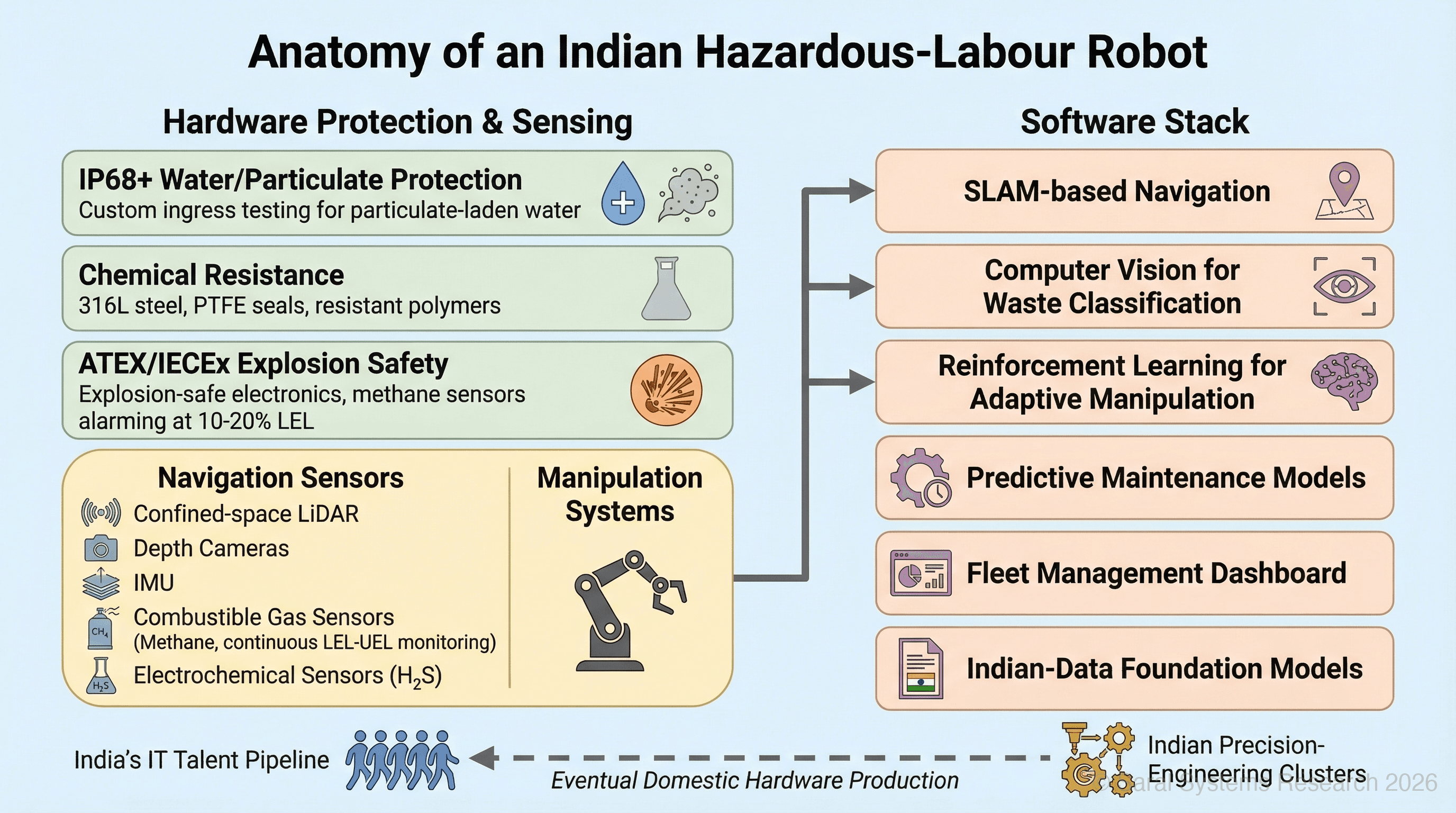
First, water and particulate ingress protection: IP68 certification as a starting reference, though it is critical to understand that IP68 under IEC 60529 is tested with clean water, and a sewer robot submerged in water laden with suspended solids and abrasive particulates would require custom ingress testing well beyond the standard protocol — meaning IP68 is a baseline vocabulary rather than a sufficient specification.
Second, and separately, chemical resistance: hydrogen sulphide — which is acutely toxic at concentrations as low as 100 parts per million and immediately dangerous to life at higher levels — attacks seals and corrodes metallic components, demanding materials selection in the range of 316L stainless steel and PTFE seals and chemically resistant polymer housings.
Third, and distinct again, explosion safety: methane is an asphyxiant that displaces oxygen and becomes an explosion risk above its Lower Explosive Limit of roughly 5% concentration by volume in air, though in practice, catalytic bead or NDIR methane sensors on the robot should trigger alerts at 10–20% of LEL — meaning 0.5–1.0% methane concentration — with automatic shutdown or withdrawal well before the 5% threshold is reached. (It is also worth noting the Upper Explosive Limit of approximately 15%, above which the mixture becomes too rich to ignite — relevant because sewer atmospheres can oscillate across the entire explosive range as gas pockets shift and ventilation changes, making continuous monitoring essential rather than optional. The robot's electronics must meet ATEX or IECEx intrinsic safety certification for methane-rich atmospheres).
A robot can be perfectly waterproof and still fail catastrophically in a sewer if its seals dissolve in H₂S or its electronics ignite a methane pocket. These are three separate design problems, and treating them as one is how prototypes die.
Beyond environmental hardening, the robot needs navigation in GPS-denied environments where no map exists and the topology changes with every monsoon season. The primary approach here is SLAM — Simultaneous Localisation and Mapping — using LiDAR or depth cameras, though sewer environments present specific challenges that make SLAM harder than in most indoor settings: repetitive cylindrical geometries that offer few distinctive features, water surface reflections that confuse LiDAR returns, and IMU drift in long featureless stretches. Manipulation capabilities for heterogeneous waste add another layer — a category that includes everything from plastic bags to construction rubble to organic matter in various states of decomposition. These are hard engineering problems, and they are hard in ways that are specific to Indian conditions.
This specificity is precisely the argument made in The Hindu's analysis: robots operating in Indian sewers must be trained on Indian sewer data. Pipe diameters that follow no single standard, waste compositions that vary by region and season, flooding patterns shaped by monsoon intensity and municipal drainage capacity — these are not parameters that can be borrowed from a foreign dataset. The data sovereignty argument, so often invoked in the context of cloud computing and social media, applies with even greater force to Physical AI. A robot navigating a sewer in Varanasi cannot rely on training data from Shenzhen.
The software stack, however, is where India's existing strengths become directly relevant. Computer vision for waste classification and SLAM-based navigation augmented by reinforcement learning and fleet management systems for coordinating dozens of robots across a municipal network and predictive maintenance models that learn from every deployment cycle — the value chain in industrial robotics is shifting decisively toward AI-driven software, and India's IT talent pool is arguably better positioned for this layer than for hardware manufacturing.
The hardware question is more complicated than a single component cost can convey. Chinese actuator suppliers have made the per-joint economics dramatically more favourable than they were even three years ago, but a complete sewer-capable robot — with dozens of actuators and environmental hardening and compute and power and communications — will cost in the range of ₹25–50 lakh or more, depending on capability, based on what we can infer from systems like Genrobotics' Bandicoot and from Chinese humanoid target pricing in the $20,000–$50,000 range. And there is a deeper tension here that the article's own logic about data sovereignty demands we name: relying on Chinese actuators and components for robots meant to embody Indian technological sovereignty is itself a dependency that needs a roadmap. India's precision engineering clusters — in Pune and Coimbatore and elsewhere — and institutions like BHEL and DRDO possess capabilities that could, with sustained investment and clear demand signals from a national robotics mission, begin to close the gap on critical hardware components. The intelligence that makes these machines useful in Indian conditions — the software, the data, the models — is the layer India must own first, but hardware sovereignty must follow if the word sovereignty is to mean anything beyond a conference slide.
The deployment model matters as much as the technology. A Robots-as-a-Service (RaaS) framework — where municipal corporations pay per deployment or per kilometre of sewer cleaned, rather than purchasing robots outright — shifts the financial burden from CapEx to OpEx, making adoption viable for cash-strapped urban local bodies that cannot justify a ₹25–50 lakh capital expenditure but can absorb a monthly service fee. To make this concrete: a manual sewer-cleaning deployment typically involves a crew of three to five workers at daily wages in the range of ₹500–800 per person, plus equipment and supervision, bringing the direct per-deployment cost to roughly ₹5,000–₹10,000 — though this figure, drawn from municipal budget patterns and reporting by organisations like the Centre for Science and Environment, captures only the costs that appear on paper and excludes the medical and insurance and liability costs that the article's own argument identifies as externalised. A RaaS model that prices robotic deployment competitively with even the visible portion of that figure while eliminating the human risk becomes viable before you account for the externalised costs of occupational illness and death that no balance sheet currently carries. The economics have been moving in this direction for years. What was lacking was not money but moral clarity.
346 Million Reasons to Start Now
By 2050, India will have 346 million senior citizens — a population larger than the current United States — and the eldercare infrastructure to support them does not exist and cannot be built with human labour alone, particularly in tier-2 and tier-3 cities where healthcare professionals are scarce and growing scarcer.
This is where the pipeline argument becomes industrial strategy rather than moral sentiment. Building robots for sewers and landfills today creates the engineering talent that only comes from solving hard problems repeatedly, and a manufacturing base that such solving demands, and data pipelines fed by every deployed robot, and institutional knowledge that no amount of foreign licensing can substitute for. Each sewer-cleaning robot that maps a drainage network generates navigation data. Each waste-sorting robot that classifies debris trains a vision model. A distributed, standardised installed base of Indian robots operating in Indian conditions creates the data flywheel to train India's own foundation models for Physical AI. Without this flywheel, India's future robots — in hospitals and farms and warehouses — will run on foreign AI, trained on foreign data, encoding foreign assumptions about Indian realities. The well, in other words, is also a source. What we learn from the descent feeds every ascent that follows.
The policy levers already exist — and the most directly relevant among them is NAMASTE, the National Action for Mechanised Sanitation Ecosystem, jointly administered by the Ministry of Social Justice and Empowerment and the Ministry of Housing and Urban Affairs, designed specifically to eliminate manual sewer cleaning through mechanisation. NAMASTE represents an explicit governmental acknowledgment that this work must be done by machines, and yet its execution has been hampered by insufficient funding and the gap between central policy and municipal implementation — the familiar Indian distance between gazette notification and ground reality. Beyond NAMASTE, Swachh Bharat 2.0 and the Smart Cities Mission and AMRUT and the National Urban Livelihoods Mission — these programmes allocate thousands of crores toward urban sanitation and infrastructure. Integrating robotics deployment into these frameworks, making hazardous-labour robotics a binding operational requirement within NAMASTE rather than an aspirational target, would transform the economics overnight. A robot that frees a Dalit worker from a sewer also generates the navigation data that keeps India from depending on a Chinese foundation model — dignity and sovereignty flowing from the same deployment and the same machine and the same descent into the dark and the same data streaming back up into the light.
The Questions the Embarrassment Was Trying to Surface
The Galgotias moment was small and embarrassing and perfect in its symbolism — a borrowed machine admired in bright light while the well behind it, the one that has always been there, continued to claim its annual toll. India will likely be embarrassed and move on — comfort is what nations choose when confrontation costs more than they wish to spend — unless the moment is seized to ask the questions that the embarrassment was trying, in its clumsy way, to surface. What does any of it mean — Make in India and technological sovereignty and the whole aspirational vocabulary that fills conference halls and empties of meaning the moment the microphones are switched off — if the robots that might liberate our most oppressed citizens are designed elsewhere and trained on someone else's reality, and if our own engineers are assembling foreign architectures rather than solving Indian problems with Indian intelligence on Indian data?
The measure that matters is not on any stage — it is in the air quality at the bottom of a manhole at two in the afternoon, and in whether a human being is breathing it.
The caste-technology intersection is not a footnote to India's robotics story — it is the central chapter. Robotics deployed for hazardous-labour elimination is a technology in which social liberation and economic productivity are so thoroughly fused that neither can be extracted from the other without falsifying both — the two functions braided together so tightly that separating them would require a dishonesty most policy documents are happy to provide. The question India must answer — and it is a question that will define whether our technological ambition has moral substance or is merely spectacle — is whether its first ten thousand robots will descend into the sewers where its own people are still dying, and whether the factories and the export ambitions and the global competition will be built on that foundation or on something borrowed and hollow.
I imagine a morning in some tier-2 city — Trichy, perhaps, or Indore — a few years from now. A municipal robot descends into a manhole, its sensors reading hydrogen sulphide at 14 parts per million and falling, its combustible-gas detector confirming methane well below the Lower Explosive Limit, its arms reaching into the blockage with a patience that belongs to machines and that we once mistook for courage in the men who came before, as though willingness to die were a virtue rather than an absence of alternatives. Above ground, a man watches the feed on a tablet screen, his fingers adjusting the robot's path. He is the operator now. His father did this work with his hands and his lungs and the borrowed time of a body that was never meant to breathe what it was asked to breathe. His children will not inherit this descent. He is alive, and the monsoon light falls on his face, and somewhere a report is being filed that says the sewer is clear.
India will keep sending its sons down the well until it decides to send a machine instead, and every day between now and that decision is a day measured in methane and in lungs and in the particular silence of a newspaper item on page seven that no one reads twice.